
Build Practical AI Capability Across Government School Systems Today
Plan teacher readiness, classroom use, student access and scalable support before expanding technology across schools.
Government-school AI planning has to work at scale and under real operating constraints. Moris AI Schools focuses on practical adoption: preparing teachers, defining classroom use, considering access, supporting students and building implementation processes that can be understood across multiple schools or education teams.

01Part 1 of 7
Define the Education Problem Before Selecting AI Technology
A clear educational purpose should come before tools, devices or platform decisions.
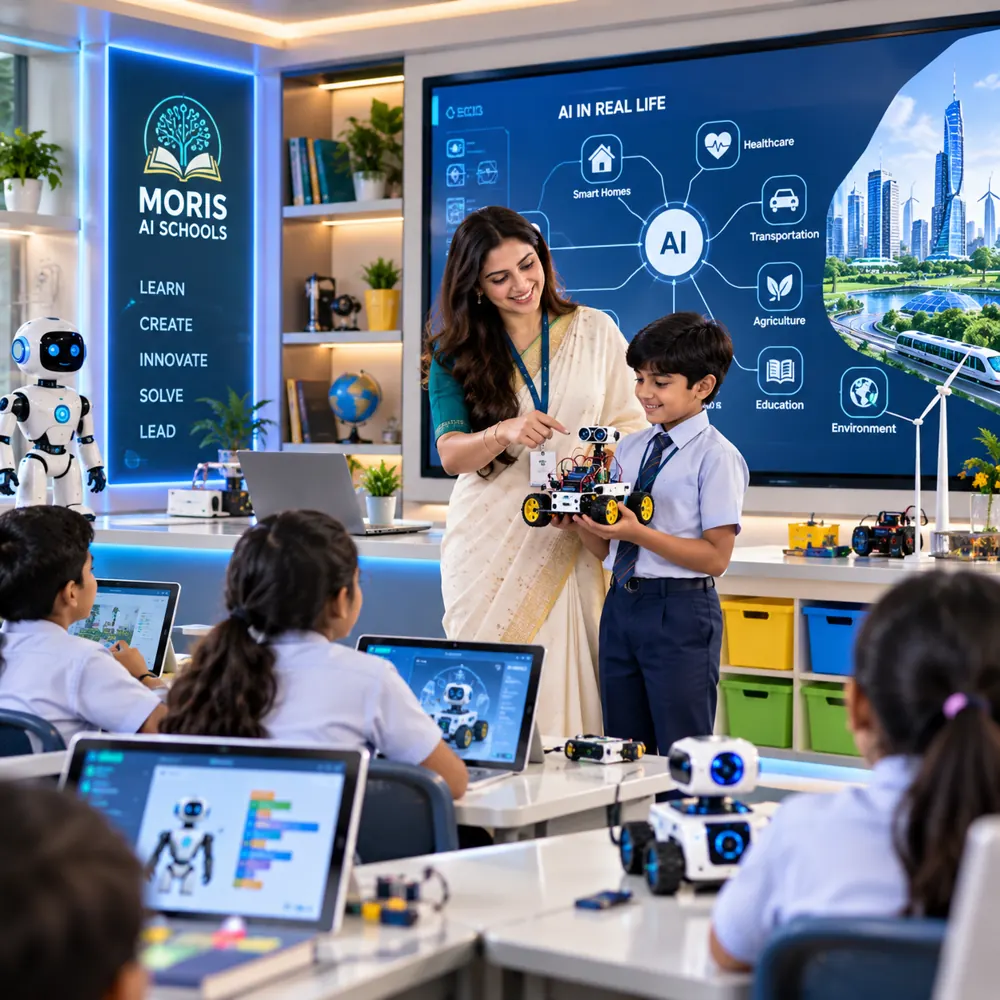
For government education leaders, school administrators and teachers, scalable public-school AI capability begins with a diagnosis of the current education environment. The institution should identify what teachers are able to do today, how students currently learn, which systems are already in use and where the largest gaps appear. Moris AI Schools does not treat AI as a single product that can be installed and declared complete. The practical question is how access, teacher readiness, infrastructure, consistent classroom use and responsible implementation can be improved together so the institution develops an AI education model that can be adopted progressively without separating technology from teaching. This prevents investment from being separated from the people expected to use it every day.
A useful assessment also distinguishes a technology problem from a capability problem. A classroom may already have screens and software but still produce little change because teachers have not been trained to use them in lessons. Another institution may have capable educators but weak infrastructure or inconsistent access. Some institutions need better student activities rather than additional tools. Others need clearer administration, policies or support. Naming the real constraint helps leaders avoid spending money on the wrong layer of the problem.
02Part 2 of 7
Build Educator Capability Into Every Technology Decision
Teachers and academic teams need practical confidence if AI is expected to improve learning.
For government education leaders, school administrators and teachers, scalable public-school AI capability begins with a diagnosis of the current education environment. The institution should identify what teachers are able to do today, how students currently learn, which systems are already in use and where the largest gaps appear. Moris AI Schools does not treat AI as a single product that can be installed and declared complete. The practical question is how access, teacher readiness, infrastructure, consistent classroom use and responsible implementation can be improved together so the institution develops an AI education model that can be adopted progressively without separating technology from teaching. This prevents investment from being separated from the people expected to use it every day.
A useful assessment also distinguishes a technology problem from a capability problem. A classroom may already have screens and software but still produce little change because teachers have not been trained to use them in lessons. Another institution may have capable educators but weak infrastructure or inconsistent access. Some institutions need better student activities rather than additional tools. Others need clearer administration, policies or support. Naming the real constraint helps leaders avoid spending money on the wrong layer of the problem.
03Part 3 of 7
Plan for Access and Consistency Across Different School Conditions
Public education plans must account for differences in connectivity, devices, teacher confidence and local support.
For government education leaders, school administrators and teachers, scalable public-school AI capability begins with a diagnosis of the current education environment. The institution should identify what teachers are able to do today, how students currently learn, which systems are already in use and where the largest gaps appear. Moris AI Schools does not treat AI as a single product that can be installed and declared complete. The practical question is how access, teacher readiness, infrastructure, consistent classroom use and responsible implementation can be improved together so the institution develops an AI education model that can be adopted progressively without separating technology from teaching. This prevents investment from being separated from the people expected to use it every day.
A useful assessment also distinguishes a technology problem from a capability problem. A classroom may already have screens and software but still produce little change because teachers have not been trained to use them in lessons. Another institution may have capable educators but weak infrastructure or inconsistent access. Some institutions need better student activities rather than additional tools. Others need clearer administration, policies or support. Naming the real constraint helps leaders avoid spending money on the wrong layer of the problem.
04Part 4 of 7
Connect Classrooms Systems and Administration With Clear Roles
Institutional AI works better when academic and operational responsibilities are understood.
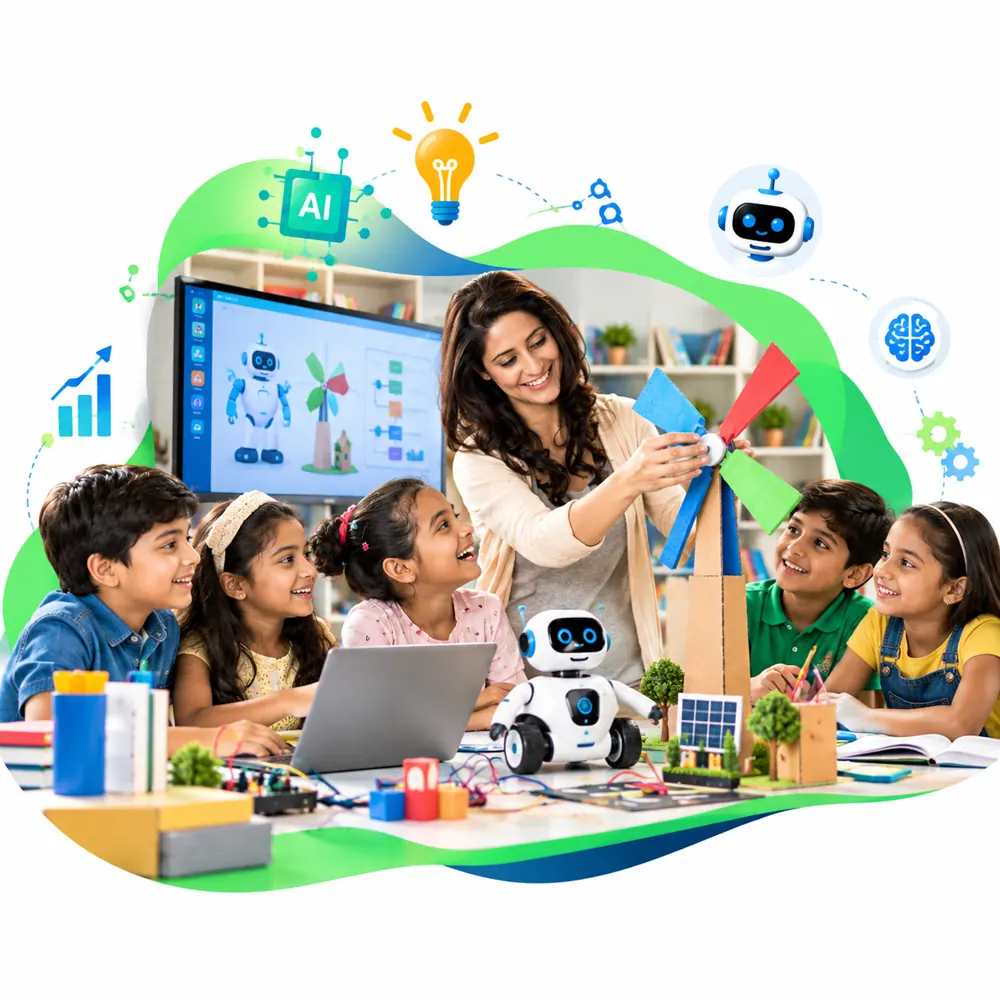
For government education leaders, school administrators and teachers, scalable public-school AI capability begins with a diagnosis of the current education environment. The institution should identify what teachers are able to do today, how students currently learn, which systems are already in use and where the largest gaps appear. Moris AI Schools does not treat AI as a single product that can be installed and declared complete. The practical question is how access, teacher readiness, infrastructure, consistent classroom use and responsible implementation can be improved together so the institution develops an AI education model that can be adopted progressively without separating technology from teaching. This prevents investment from being separated from the people expected to use it every day.
A useful assessment also distinguishes a technology problem from a capability problem. A classroom may already have screens and software but still produce little change because teachers have not been trained to use them in lessons. Another institution may have capable educators but weak infrastructure or inconsistent access. Some institutions need better student activities rather than additional tools. Others need clearer administration, policies or support. Naming the real constraint helps leaders avoid spending money on the wrong layer of the problem.
05Part 5 of 7
Prepare Teachers Before Expanding Systems Across More Schools
Scalable technology has limited value when teachers have not had enough time and support to use it well.
For government education leaders, school administrators and teachers, scalable public-school AI capability begins with a diagnosis of the current education environment. The institution should identify what teachers are able to do today, how students currently learn, which systems are already in use and where the largest gaps appear. Moris AI Schools does not treat AI as a single product that can be installed and declared complete. The practical question is how access, teacher readiness, infrastructure, consistent classroom use and responsible implementation can be improved together so the institution develops an AI education model that can be adopted progressively without separating technology from teaching. This prevents investment from being separated from the people expected to use it every day.
A useful assessment also distinguishes a technology problem from a capability problem. A classroom may already have screens and software but still produce little change because teachers have not been trained to use them in lessons. Another institution may have capable educators but weak infrastructure or inconsistent access. Some institutions need better student activities rather than additional tools. Others need clearer administration, policies or support. Naming the real constraint helps leaders avoid spending money on the wrong layer of the problem.
06Part 6 of 7
Measure Adoption Through Use Quality and Learning Evidence
Institutions need evidence of meaningful use rather than counting tools, logins or announcements.
For government education leaders, school administrators and teachers, scalable public-school AI capability begins with a diagnosis of the current education environment. The institution should identify what teachers are able to do today, how students currently learn, which systems are already in use and where the largest gaps appear. Moris AI Schools does not treat AI as a single product that can be installed and declared complete. The practical question is how access, teacher readiness, infrastructure, consistent classroom use and responsible implementation can be improved together so the institution develops an AI education model that can be adopted progressively without separating technology from teaching. This prevents investment from being separated from the people expected to use it every day.
A useful assessment also distinguishes a technology problem from a capability problem. A classroom may already have screens and software but still produce little change because teachers have not been trained to use them in lessons. Another institution may have capable educators but weak infrastructure or inconsistent access. Some institutions need better student activities rather than additional tools. Others need clearer administration, policies or support. Naming the real constraint helps leaders avoid spending money on the wrong layer of the problem.
07Part 7 of 7
Plan a Sustainable Path From Readiness to Wider Adoption
A phased plan helps institutions improve capability before increasing scale or complexity.
For government education leaders, school administrators and teachers, scalable public-school AI capability begins with a diagnosis of the current education environment. The institution should identify what teachers are able to do today, how students currently learn, which systems are already in use and where the largest gaps appear. Moris AI Schools does not treat AI as a single product that can be installed and declared complete. The practical question is how access, teacher readiness, infrastructure, consistent classroom use and responsible implementation can be improved together so the institution develops an AI education model that can be adopted progressively without separating technology from teaching. This prevents investment from being separated from the people expected to use it every day.
A useful assessment also distinguishes a technology problem from a capability problem. A classroom may already have screens and software but still produce little change because teachers have not been trained to use them in lessons. Another institution may have capable educators but weak infrastructure or inconsistent access. Some institutions need better student activities rather than additional tools. Others need clearer administration, policies or support. Naming the real constraint helps leaders avoid spending money on the wrong layer of the problem.
Build a Practical AI Education Plan for Government Schools Today
Connect technology, educator capability and student learning around a clear institutional purpose.
Discuss your current education environment, priorities and readiness with Moris AI Schools. Start with the problem, identify the people involved and define a practical next step before expanding technology.

Bring Practical AI Into Your Institution
Tell us where your institution stands today. We will understand the requirement before suggesting the next step.
Institution Transformation Enquiry
Tell Us What You Need
Thank you
Your enquiry has been received. The Moris AI Schools team will review your requirement and connect with you.
More in Schools
Back to Home
Build stronger teaching, student engagement and parent value through practical AI capability across the school.
Explore
Connect faculty capability, labs, student projects and digital systems to practical academic and career outcomes.
Explore
Improve remote teaching, learner support and digital operations without removing educator judgment or student effort.
Explore
Connect teaching, technology, educator capability and student learning through one practical institutional plan.
Explore